What a mobile windshield replacement involves
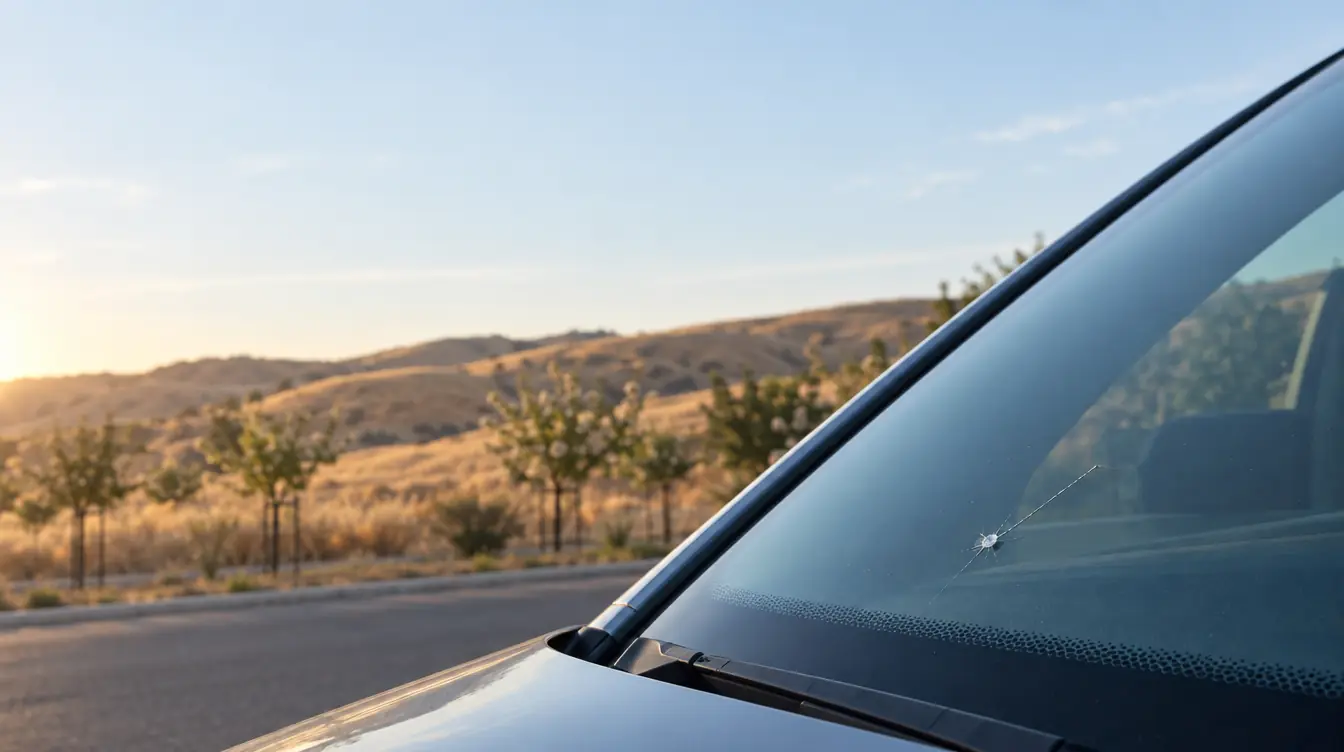
A windshield is laminated safety glass: two sheets of glass bonded to a clear plastic interlayer (PVB) that holds the pieces together when it breaks. It is bonded to the car body, not just set in place, and it backs up the passenger airbag and helps keep the roof from crushing in a rollover. That is why the installation matters as much as the glass.
- Step 1
Match the glass
The same model year can use several windshields: with or without a forward camera, rain and light sensor, heated wiper area, acoustic interlayer or head-up display. The part is matched to your VIN and features. You can choose OEM glass or OE-equivalent glass built to the same specification.
- Step 2
Remove & prep
The old glass is cut out, the cowl panel, moldings and mirror come off, and old urethane is trimmed back on the pinch weld (the metal flange the glass sits on). Scratches are primed so rust doesn't start under the new bond.
- Step 3
Set on urethane
A continuous bead of urethane adhesive goes down, the glass is set and centered, and trim, mirror and sensors go back on. The black frit band around the edge hides the adhesive and protects it from UV.
- Step 4
Calibrate & cure
A windshield-mounted camera is recalibrated after the glass goes in. Before you drive, you should get the safe drive-away time for the urethane used, plus care tips: leave a window cracked, skip the car wash for a day or two, keep the retention tape on.
Does your car need camera calibration?
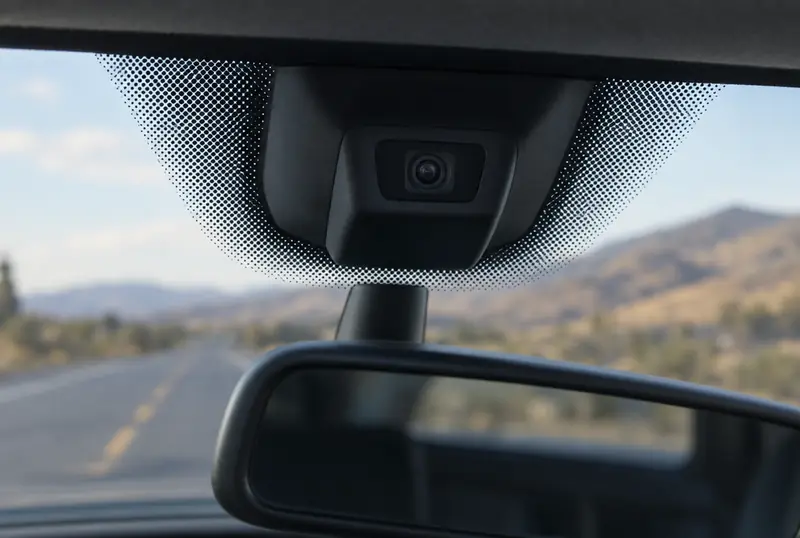
Many cars built in the last decade have a camera behind the windshield near the mirror. After a replacement, that camera has to be aimed again to the carmaker's specification, either with printed targets set in front of the car (static calibration), on a road drive with a scan tool (dynamic), or both. A camera that is off by a fraction of a degree can misjudge lane lines or distance. The calibration page explains how to tell if your car needs it.
What's different about glass in East Contra Costa
Heat swings
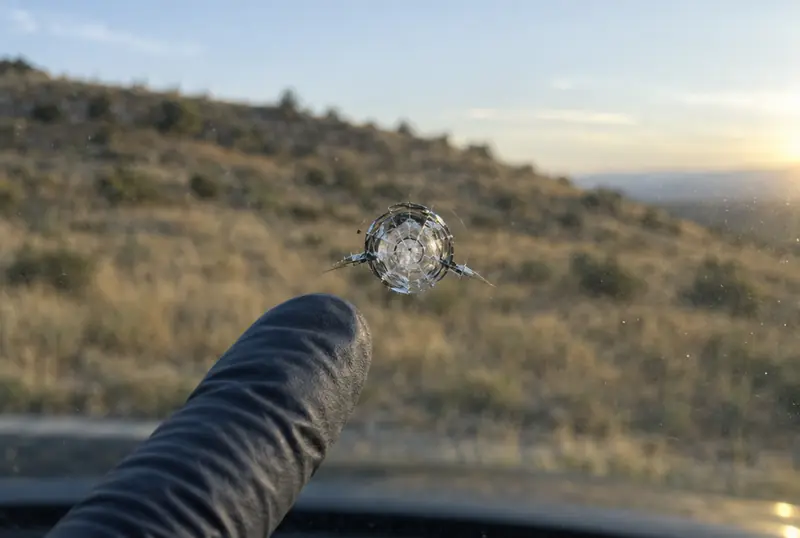
Hot inland afternoons, a cool evening Delta breeze and the AC or defroster on full put stress on chipped glass. That is when chips run into cracks.
Commuter gravel
Highway 4, the Bypass, Vasco Road and Byron Highway carry trucks and freeway speeds, a common source of rock chips.
Sun on the cabin
A car parked in the summer sun heats up fast. Ceramic film cuts heat without breaking California's front-window rule.
Broken side window or back glass after a break-in
Side and rear windows are usually tempered glass, which shatters into small cubes instead of cracking. Car break-ins are regularly reported in Brentwood police logs, often on busy retail corridors like Balfour Road and Lone Tree Way. If it happens: take photos, file a report, cover the opening with plastic if it may rain, and avoid rolling the broken window's frame up or down. Door glass needs the shattered pieces vacuumed out of the door and cabin before the new glass goes in. See side window replacement and back glass replacement.
Paying with insurance in California
Glass damage from rocks, vandalism or break-ins falls under comprehensive coverage, which is optional in California. With it, a replacement is typically covered minus your deductible; many insurers also waive or reduce the deductible for chip repair, but that depends on the policy, not state law. California Insurance Code section 758.5 bars insurers from requiring you to use a particular repair shop. Details: how windshield insurance claims work.
Window tint that stays legal in California
Windshield
Top strip only
Front sides
70%+ light
Rear & back
Any shade
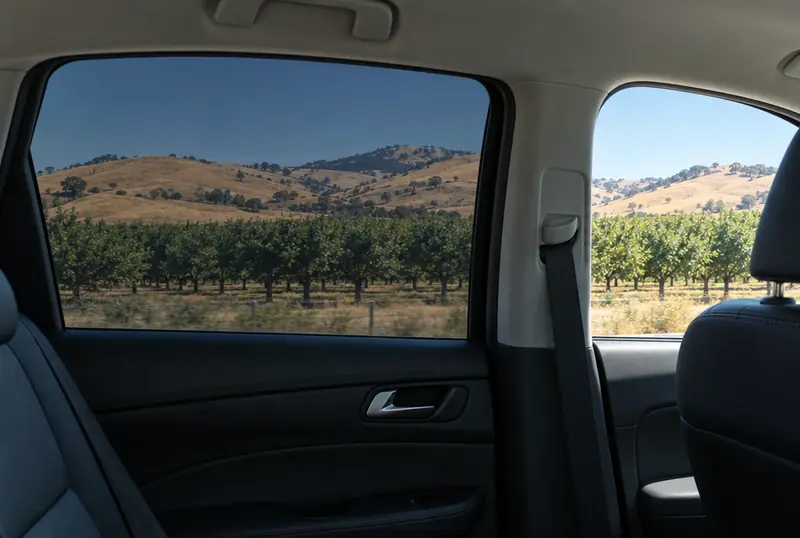
Brentwood summers are hot, and a car parked in the sun heats up fast. Good tint helps, but California is strict about the front: film on the driver and front-passenger windows must be clear, with at least 88% light transmission, and the windshield can only have a strip at the very top. Rear side windows and the back glass can be any darkness. Window tinting covers film types and shades; ceramic tint explains how to get heat rejection without going dark. The full rules are in California tint laws.
One detail most shops don't mention: replacement side and back glass arrives untinted, and a new windshield doesn't come with your old sun strip. If your windows were tinted, ask for the new glass to be matched.
What it usually costs
| Chip repair (one chip) | $50–$150+ |
|---|---|
| Windshield replacement, most cars | $250–$800+ |
| ADAS camera calibration | $150–$600+ |
| Side window, most cars | $100–$350+ |
| Full car tint (sedan, dyed/carbon to ceramic) | $200–$500+ |
Typical published ranges, not a quote for your vehicle. Real quotes can land well below or above. Sources: Glass and Auto cost guide (2026), NuVision Auto Glass, LM Car Detailing tint guide (2026). How we use price data
More detail by vehicle and glass type: windshield replacement cost and window tint cost.
Is this the right call for your job?
Good fit
Chips, cracks and windshields; door, quarter and back glass; camera calibration; tint and tint removal on cars, trucks, SUVs and vans.
Ask first
Classic cars, very new or low-volume models, RVs and commercial trucks. Glass availability varies, so call with the VIN.
Not a fit
House, storefront or office windows, and body or paint damage. This service is auto glass and tint only.
Service area: Brentwood and East Contra Costa
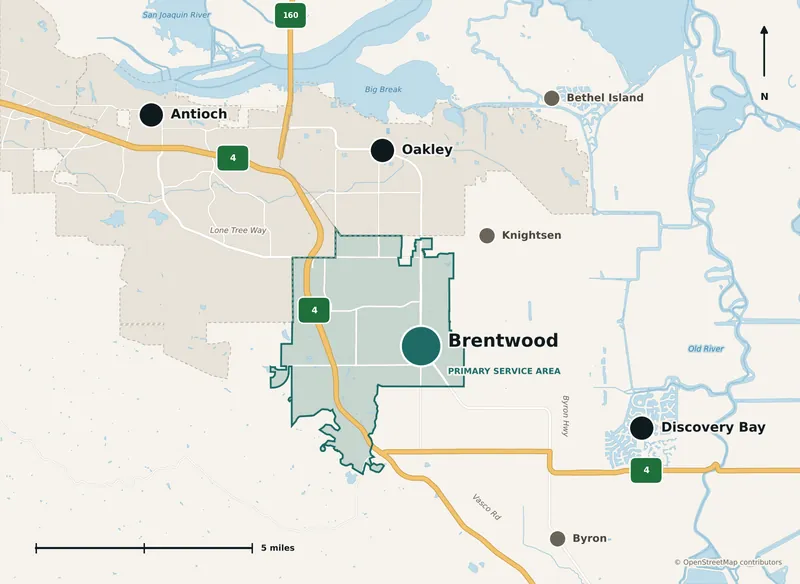
Brentwood (94513) is the primary service area, along with the communities connected by Highway 4, the Highway 4 Bypass, Vasco Road and Byron Highway. Trucks and freeway speeds on those commuter roads are a common source of rock chips.
Check any auto glass shop before you book
- Registration: California requires auto glass businesses to hold a Bureau of Automotive Repair registration. Ask for the number and look it up at bar.ca.gov.
- Written estimate: California's Automotive Repair Act entitles you to a written estimate before work starts.
- Glass type: ask whether the quote is OEM (carmaker brand) or OE-equivalent glass, and whether it fits your camera, rain sensor or heated wiper area.
- Calibration: if your car has lane-keep or automatic braking, ask how the camera will be calibrated and whether you get a report.
- Drive-away time: ask which urethane is used and how long before the car is safe to drive.
Windshield questions Brentwood drivers ask
How soon can I drive after a windshield replacement?
It depends on the urethane adhesive used and the temperature. Many fast-cure urethanes allow driving in about an hour; some need longer in cool or damp weather. The technician should tell you the safe drive-away time for your job before leaving.
Can a windshield be replaced in my driveway?
Usually, yes. Mobile replacement works at a home or office as long as there is room to open the doors and the weather is dry. Some vehicles need a shop for static camera calibration after the glass is installed.
Will a small chip spread if I wait?
It can. Temperature swings are the usual trigger: a hot Brentwood afternoon followed by the air conditioning on full, a cold morning with the defroster, or a pothole. Repairing a chip early is cheaper than replacing a windshield later.
Do I need an appointment?
Call with your year, make and model. Glass availability is checked for your exact vehicle, since the same model can use several different windshields depending on cameras, sensors and heating.
Does California replace windshields for free?
No California law makes windshield replacement free or waives the deductible for glass. If you carry comprehensive coverage, a windshield claim is usually covered minus your deductible, so the out-of-pocket amount depends on your policy. Some insurers waive the deductible for chip repair. You also have the right to choose the shop.
What's the difference between OEM and aftermarket glass?
OEM glass is made for the carmaker to its specification and carries its logo. OE-equivalent (OEE) glass is built to the same dimensions and safety standards by other manufacturers. Both must meet federal safety standards; on some camera-equipped cars the carmaker recommends OEM glass.
Is 20% or 35% tint darker?
20% is darker. The number is the share of visible light the film lets through, so a lower number means darker glass. In California, any shade is allowed on the rear side and back windows, but the front side windows must stay at least 70% light transmission.
Last reviewed October 2026. Serving Brentwood, CA 94513 and East Contra Costa County.